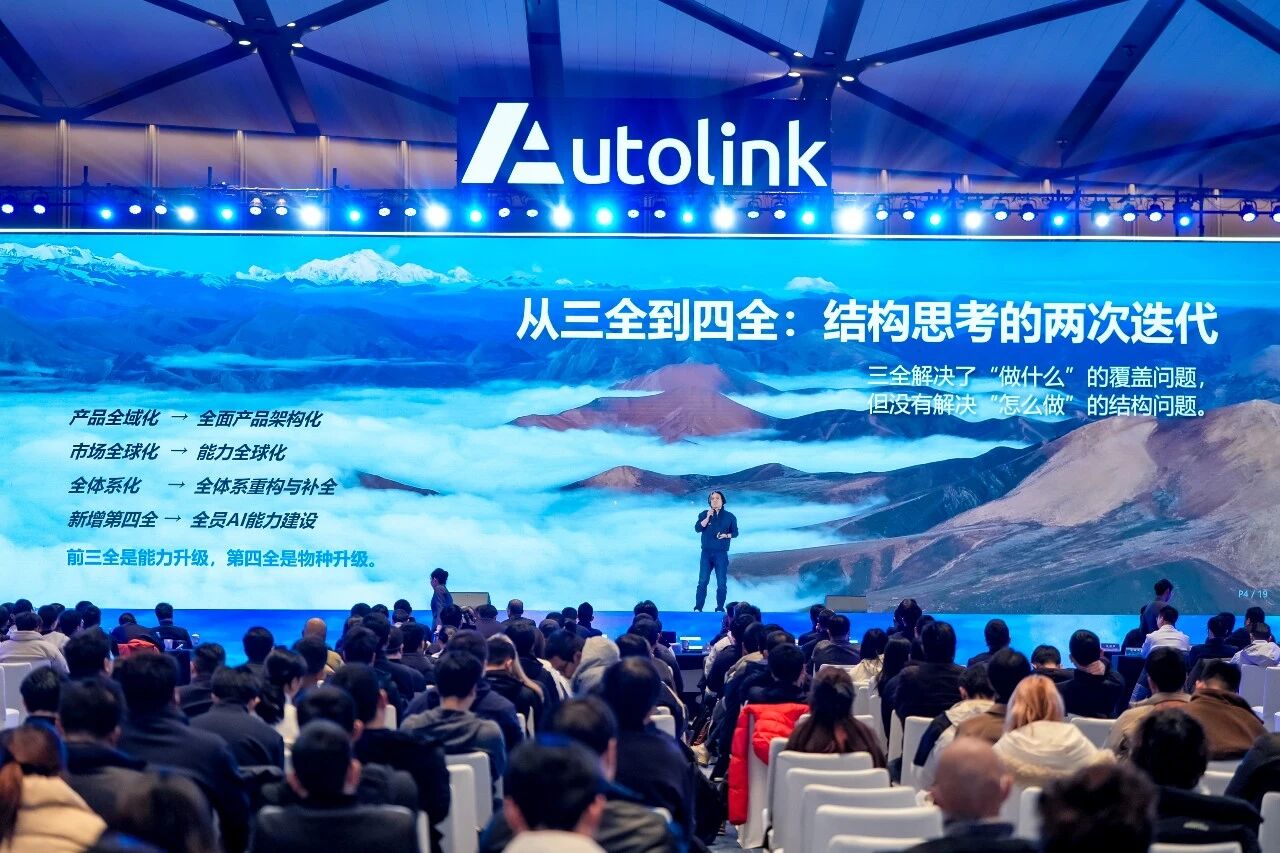
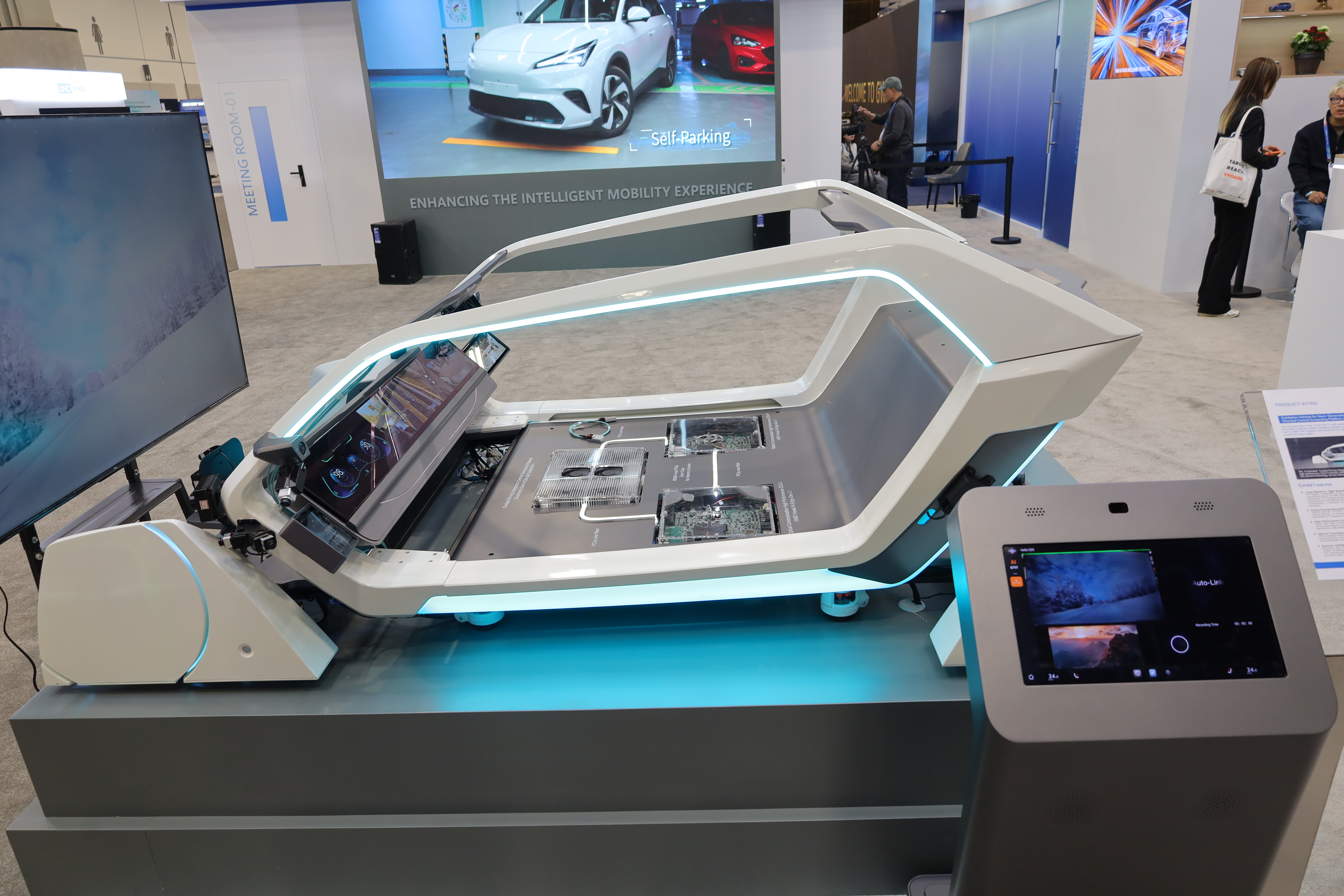
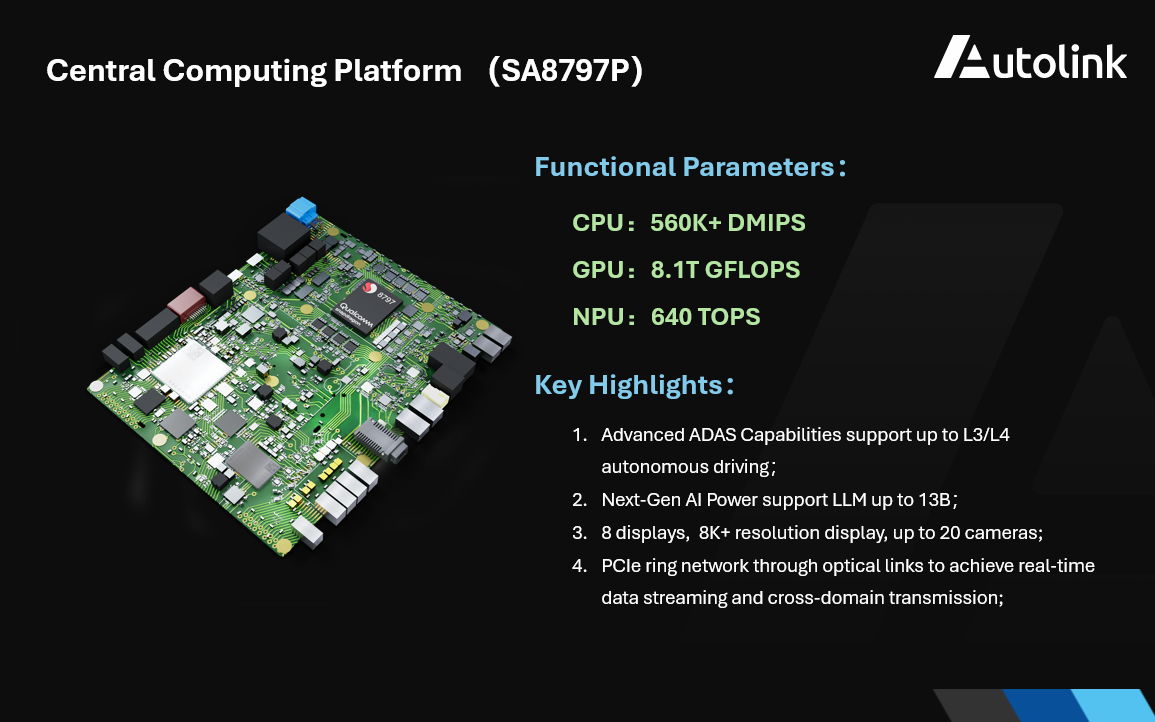
Las Vegas, USA, January 6, 2026 — On the opening day of CES 2026, Autolink, a global technology company specializing in next-generation automotive electronic/electrical (E/E) architecture and intelligent vehicle computing platforms, today officially unveiled its next-generation Deep Fusion EEA (Electronic/Electrical Architecture), marking a major milestone in the evolution of vehicle E/E systems. At the center ofthis architecture is a centralized vehicle computing platform powered by the Snapdragon® 8797 automotive-grade SoC, signaling the industry’s transition toward E/E architectures built around centralized computing.
By introducing a vehicle-level computing system centered on a central compute node, Autolink demonstrated a new approach to unifying vehicle intelligence, moving beyond traditional domain-based architectures toward a more integrated and scalable system foundation.
 Centralized Computing Moves From Concept to Production Architecture
Under Autolink’s newly unveiled Deep Fusion EEA, centralized computing is no longer confined to a single functional domain. Instead, it assumes responsibility for the vehicle’s most critical workloads, including AI inference, scheduling, real-time perception, and decision execution, effectively becoming the system-level brain of the vehicle.
Built on Snapdragon 8797’s combination of high compute density and energy efficiency, the platform is designed to simultaneously support high-performance AI workloads, on-device foundation models, advanced perception pipelines, and real-time decision-making. Dynamic resource allocation enables the system to balance cockpit and intelligent driving workloads under peak operating conditions, maintaining real-time responsiveness and system stability.
The move reflects a broader industry transition away from fragmented, domain-specific controllers toward centralized computing architectures capable of scaling with increasing software complexity and sensor density.
 Long-term Snapdragon Collaboration Underpins Architecture Evolution
The centralized computing platform is the latest result of Autolink’s long-standing collaboration with Qualcomm across multiple generations of Snapdragon automotive platforms.
Beginning with Snapdragon 8155, Autolink was among the early suppliers to bring large-scale production cockpit domain controllers to market, with solutions deployed across multiple high-volume production vehicles. These deployments validated the Snapdragon platform’s automotive-grade reliability, performance efficiency, and ecosystem maturity in mass-production environments.
In 2025, the partnership expanded further as Autolink achieved production milestones on both Snapdragon 8255 and Snapdragon 8775 platforms. Notably, Autolink’s AL-A1 integrated cockpit-driving domain controller, built on Snapdragon 8775, delivered one of the industry’s first mass-produced single-SoC solutions combining intelligent cockpit and intelligent driving workloads. The product marked a transition for cabin-driving integration from proof-of-concept to scalable production.
With the introduction of Snapdragon 8797 into a centralized computing role, the collaboration advances into a new phase, extending from domain controllers toward system-level vehicle computing architectures.
Across Snapdragon 8155, 8255, 8775, and now next-generation platforms including 8397 and 8797, Autolink and Qualcomm have established a multi-generation, multi-form-factor partnership aligned around long-term architectural evolution.
From Domain Control to Centralized Vehicle Intelligence
Autolink’s technology roadmap has consistently followed a path from single-domain controllers to multi-domain integration, and now toward centralized computing coordinated with zonal control.
This “full-domain” strategy aims to break down traditional functional boundaries within vehicle electronics, enabling unified design of compute, data flow, and software architecture at the vehicle level. The newly introduced centralized architecture represents a key milestone in this progression, laying the foundation for scalable intelligent driving, continuous over-the-air updates, and long-term software-defined vehicle evolution.
Autolink stated that it will continue to invest in centralized computing, zonal architectures, and high-speed in-vehicle communication technologies, working closely with core technology partners including Qualcomm to accelerate production deployment of next-generation E/E architectures.
As vehicle intelligence continues to scale in complexity, Autolink positions centralized computing as a structural prerequisite for the next phase of automotive innovation.