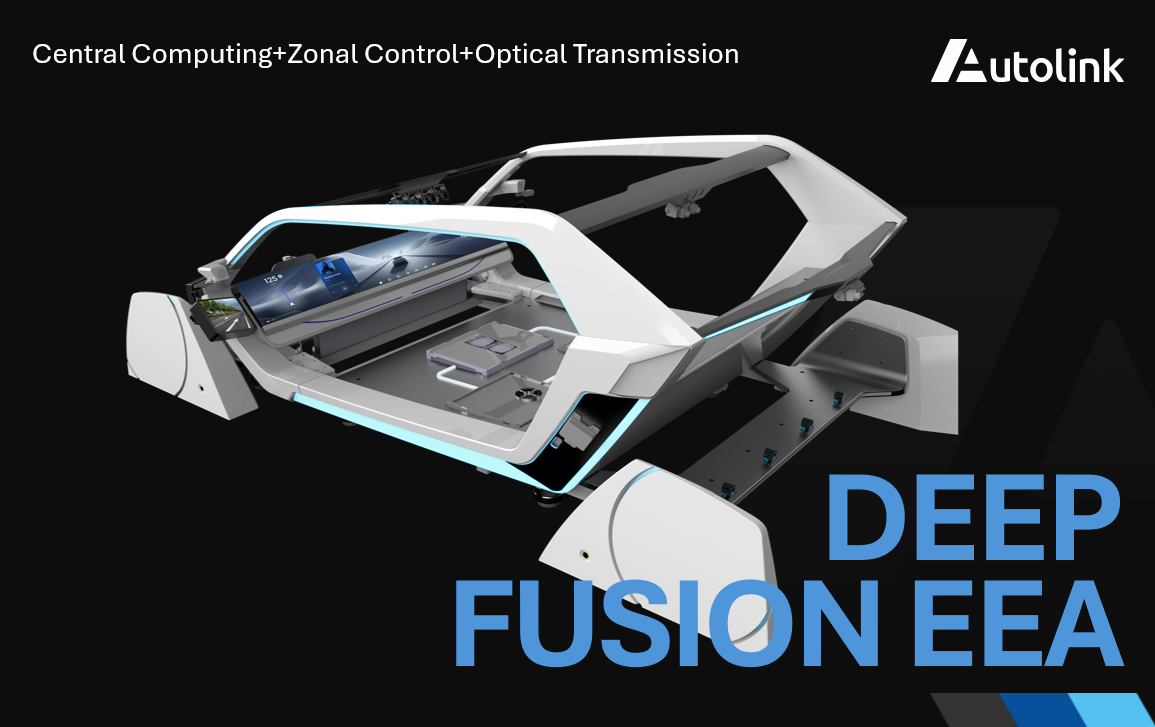
Las Vegas, USA, January 6, 2026 — At CES 2026, Autolink officially unveiled its next-generation Deep Fusion Electronic/Electrical Architecture (Deep Fusion EEA), commercially branded as AI Link 3.0.
The architecture represents the industry’s first system-level E/E platform designed for deep, full-vehicle fusion, marking a transition from traditional multi-domain coordination toward a new era of vehicle-level, deeply integrated architectures.
As demand continues to rise for advanced automated driving, immersive cockpit experiences, and full-vehicle data fusion, conventional distributed and multi-domain architectures are facing fundamental limitations in compute coordination, real-time communication, and system scalability.
In response, Autolink introduced Deep Fusion EEA with centralized computing plus distributed edge intelligence as its core architectural principle.
The platform integrates a Snapdragon® 8797–based central computing platform, AMD Versal™ AI Edge Gen 2–based edge compute nodes, and optical PCIe interconnect technology, reconstructing how vehicle compute and communication systems are designed.
Its objective is to build a PCIe ultra-bandwidth, vehicle-scale AI computing center capable of real-time sensor data sharing, multi-domain compute collaboration, and scalable AI deployment across the entire vehicle.
A System-Level Architecture Redefining Vehicle Compute and Communication
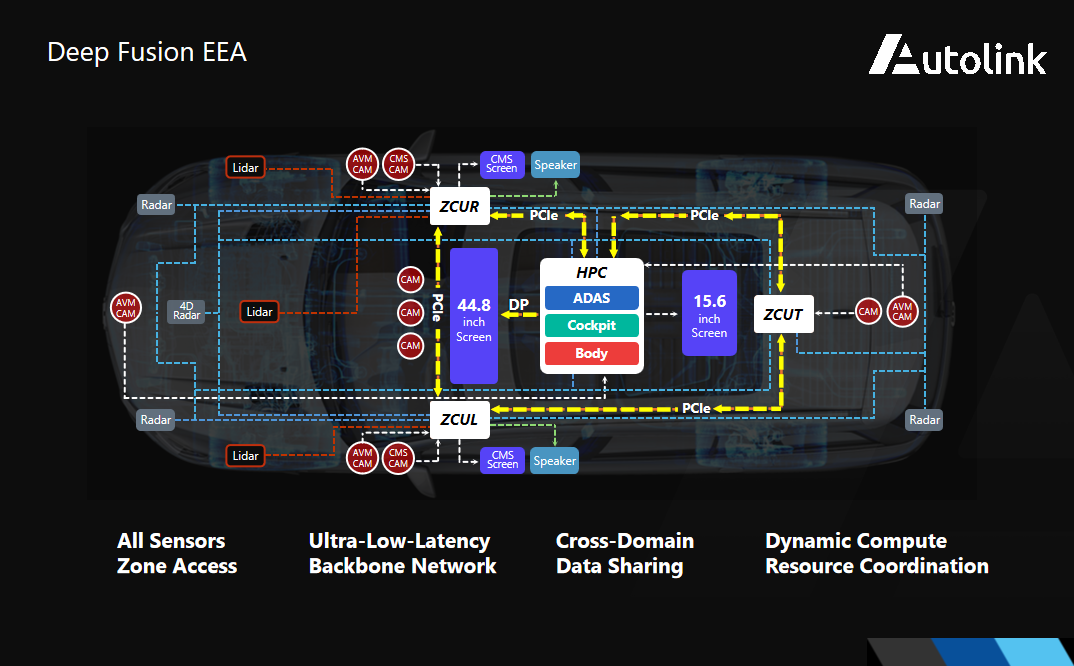
Deep Fusion EEA consists of three core components:
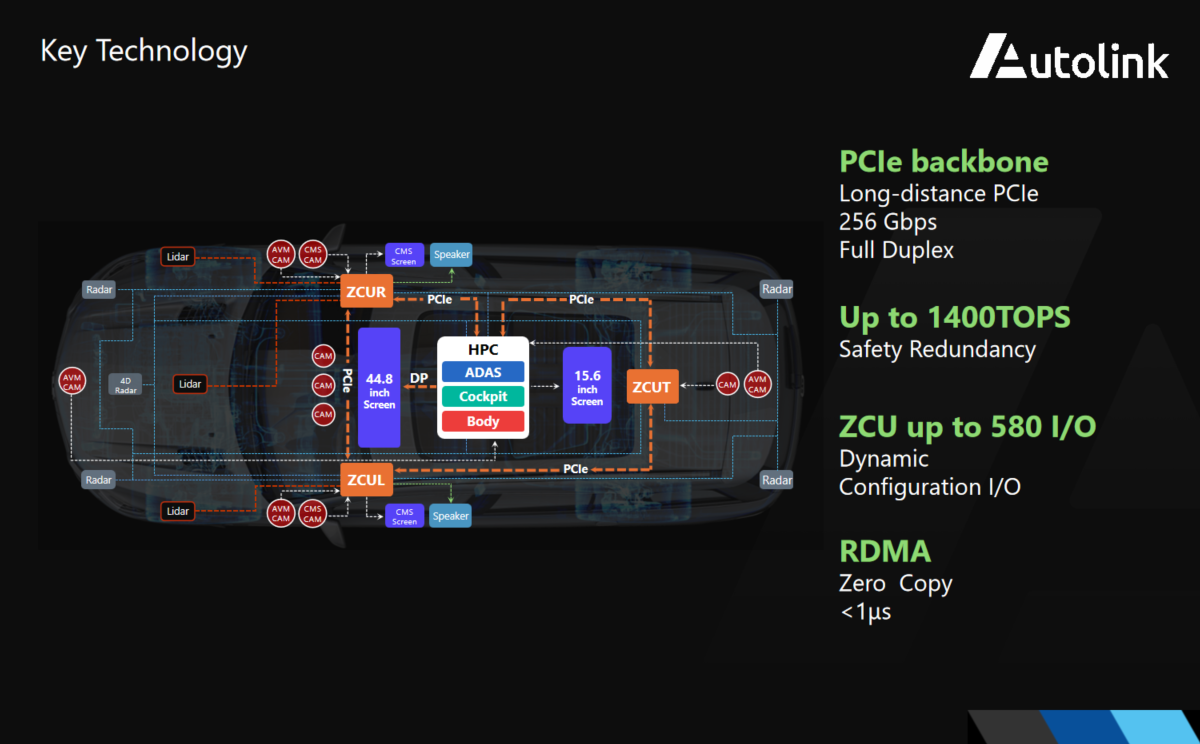
a centralized computing platform, zonal controllers, and a PCIe-based high-speed backbone network.
Together, they enable microsecond-level coordination across perception, decision-making, and control, creating a high-bandwidth, ultra-low-latency cross-domain data environment.
Within this architecture, the central computing platform functions as the system-level brain, focusing on high-performance AI workloads and global resource scheduling.
Zonal controllers act as edge AI nodes, offering localized sensor access, actuator control, and functional safety redundancy.
The two layers are interconnected via optical PCIe links, overcoming traditional PCIe distance limitations and enabling real-time, streaming data exchange across domains.
Key system-level advantages include:
· A high-bandwidth, low-latency, highly reliable vehicle communication backbone
· Support for high-resolution sensors, including 17-megapixel cameras
· Heterogeneous redundancy designed for L3/L4 automated driving
· Cross-domain compute sharing with dynamic resource scheduling
· A scalable compute foundation for on-device foundation models, intelligent cockpits, and automated driving systems
Underlying technologies include long-distance optical PCIe ring networks, fail-operational redundancy with total compute capability reaching 1,400 TOPS, flexible I/O reconfiguration, RDMA-based low-overhead data transfer, sub-microsecond end-to-end latency, and 256 Gbps bidirectional bandwidth—together forming the core of Autolink’s PCIe ultra-bandwidth in-vehicle AI computing architecture.
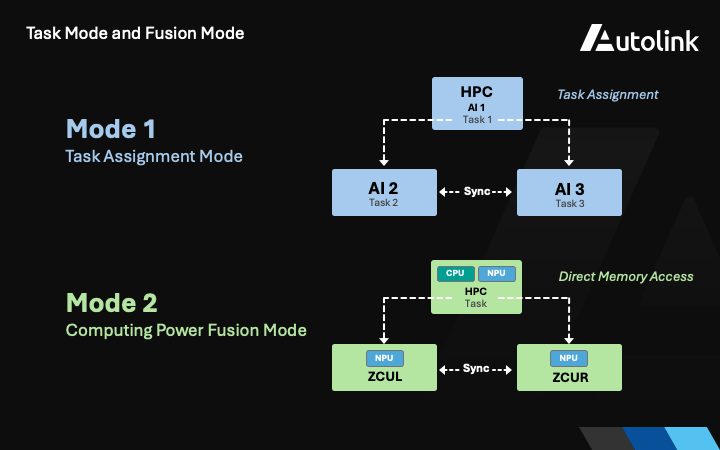
In addition to supporting conventional multi-chip AI task distribution, the architecture leverages PCIe bandwidth and DMA mechanisms to create a data-center-like, fully interconnected multi-chip compute pool.
This approach enables efficient execution of large-parameter AI models while significantly reducing software complexity and compute overhead typically associated with multi-chip coordination.
A Long-Term Architectural Rebuild for the Next Decade
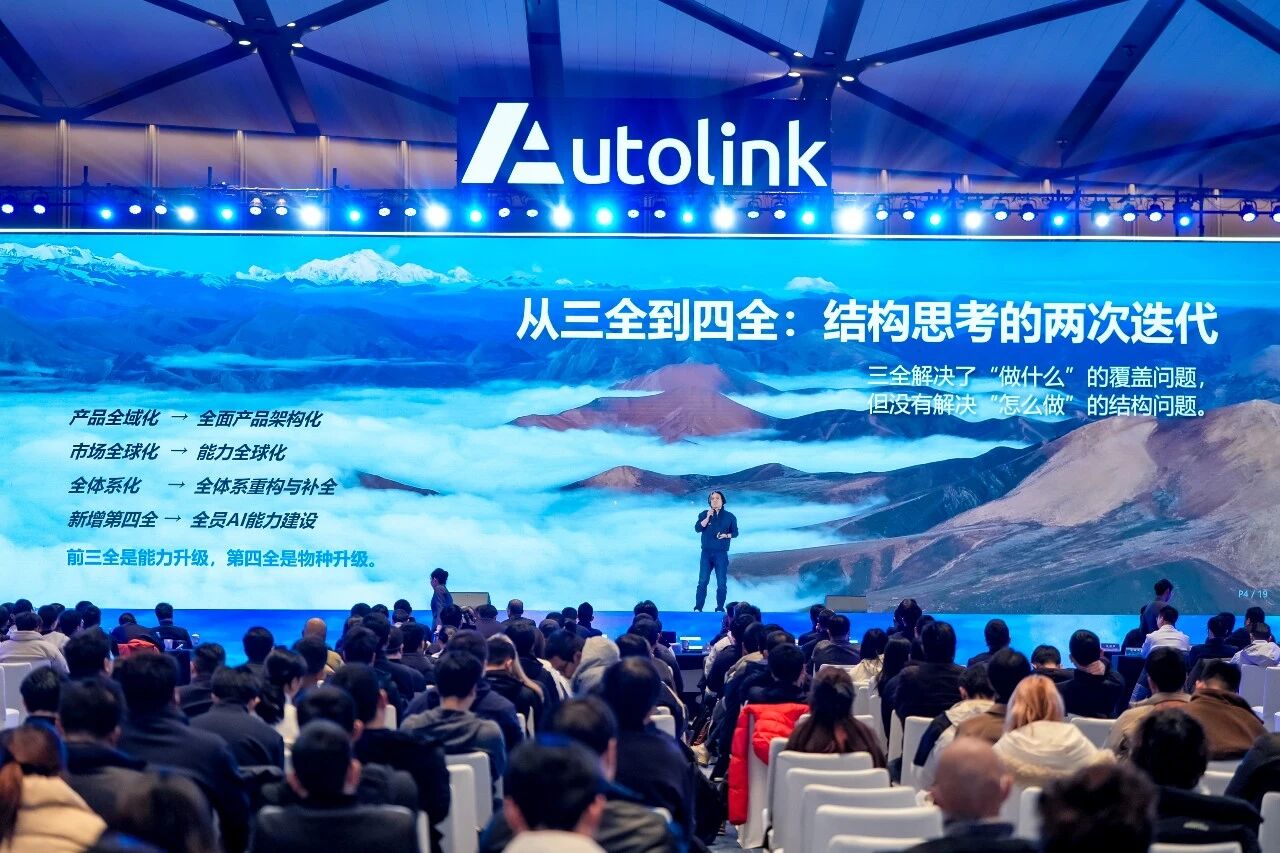
Speaking at the CES launch event, Li Zhigang, Vice President and Chief Strategy Officer of Autolink, stated:
“AI Link 3.0 Deep Fusion EEA is not designed for a single vehicle program or a single product generation. It is a foundational rebuild aimed at the next decade of intelligent system evolution.
As compute centralizes, communication architectures are redefined, and software complexity grows exponentially, traditional domain-based engineering models can no longer sustain long-term evolution.
The essence of Deep Fusion EEA is the true system-level fusion of compute, communication, and control—allowing vehicles to evolve continuously, rather than simply stacking features.”
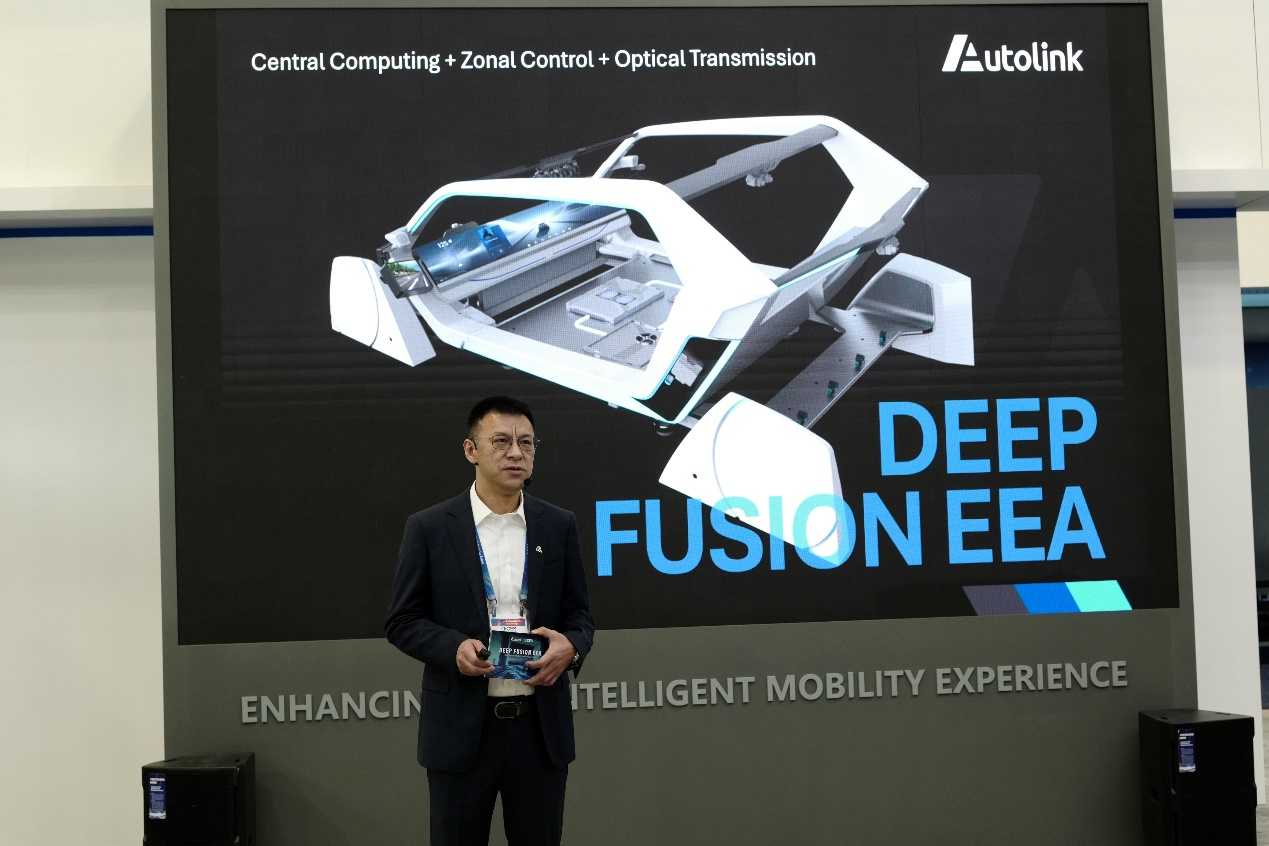
Li added that centralized computing combined with zonal coordination will become the foundational form of future intelligent vehicles, and that Deep Fusion EEA offers the industry a deployable, scalable, and evolution-ready architectural path.
From Architecture to Production-Ready Platforms
To translate the architecture into production solutions, Autolink introduced two flagship hardware platforms:
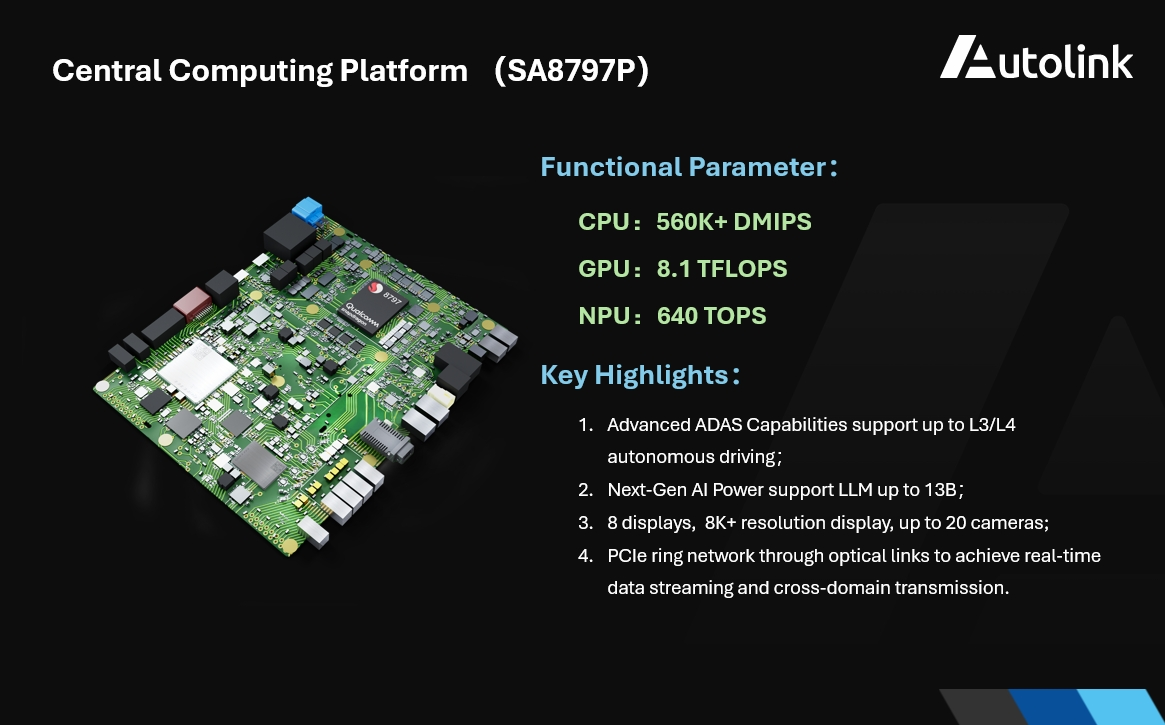
AL-A2 High-End Centralized Cabin-Driving Fusion Platform
Built on the fifth-generation Snapdragon® 8797 automotive platform, AL-A2 supports advanced automated driving and can run on-device AI models up to 13B parameters.
It supports up to eight displays, 8K+ resolution, and 20 camera inputs. Through optical PCIe links, it forms a PCIe ring network enabling real-time data streaming, seamless cross-domain interaction, and compute sharing with edge nodes.
Key specifications include 560K+ DMIPS CPU performance, 8.1 TFLOPS GPU, and 640 TOPS (sparse) NPU performance.
AL-Z2 Optical-Enabled Zonal Compute Controller
Based on the AMD Versal™ AI Edge Gen 2 platform, AL-Z2 delivers 200K DMIPS (A-core), 28K DMIPS (R-core), 268 GFLOPS GPU, and 369 TOPS (sparse) NPU performance.
It supports 17-megapixel front cameras, HD cameras, radar, audio systems, and body electronics, meets ASIL-D functional safety, and integrates CMS functionality.
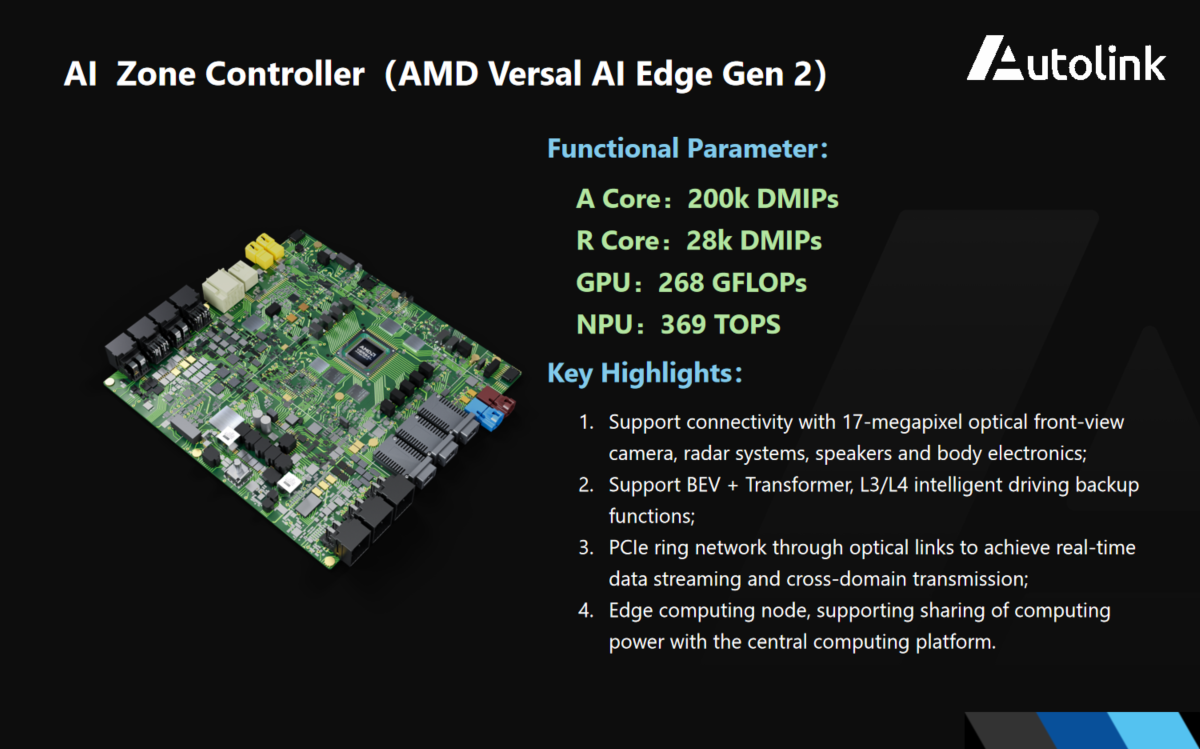 Designed for BEV + Transformer perception architectures, it targets advanced automated driving, robotaxi, and embodied intelligence scenarios, while operating in tight coordination with the central compute platform via the optical PCIe network.
Together, these platforms form the physical foundation of AI Link 3.0 and the PCIe ultra-bandwidth in-vehicle AI computing architecture.
Architecture Fusion Pointing to a Broader Intelligent Future
Deep Fusion EEA represents more than a technical implementation—it introduces a system-level design methodology for complex intelligent systems.
By unifying compute, communication, and control at the architectural level, it provides a scalable path for vehicles to evolve from functional intelligence to system intelligence, while leaving room for future intelligent forms yet to emerge.
As a key milestone under Autolink’s “Full-Domain, Global, Full-System” next-decade strategy, the launch of Deep Fusion EEA marks the realization of a PCIe ultra-bandwidth vehicle AI computing center—and a decisive step from multi-domain fusion toward full vehicle-level system integration.
Looking ahead, Autolink will continue to deepen its E/E architecture innovation through open collaboration with global partners, using AI Link 3.0 as a foundation to drive the long-term evolution of intelligent vehicle technology and industry ecosystems.