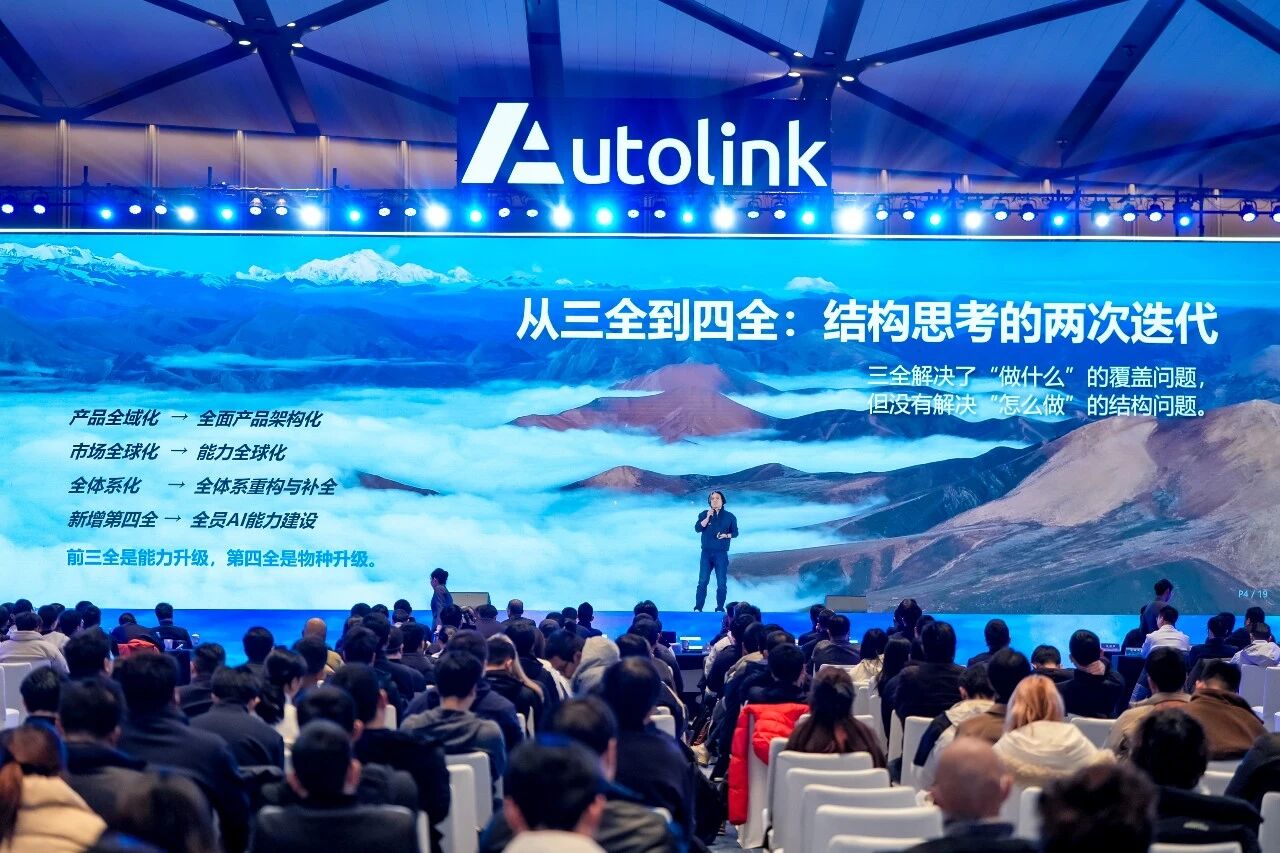
WUXI, June 4–5, 2026 — The 2026 Qualcomm Automotive Technology and Cooperation Summit was held in Wuxi, bringing together industry leaders to explore how on-device large models, AI agents, and centralized computing architectures are accelerating the transition toward AI-Defined Vehicles (AIDV).
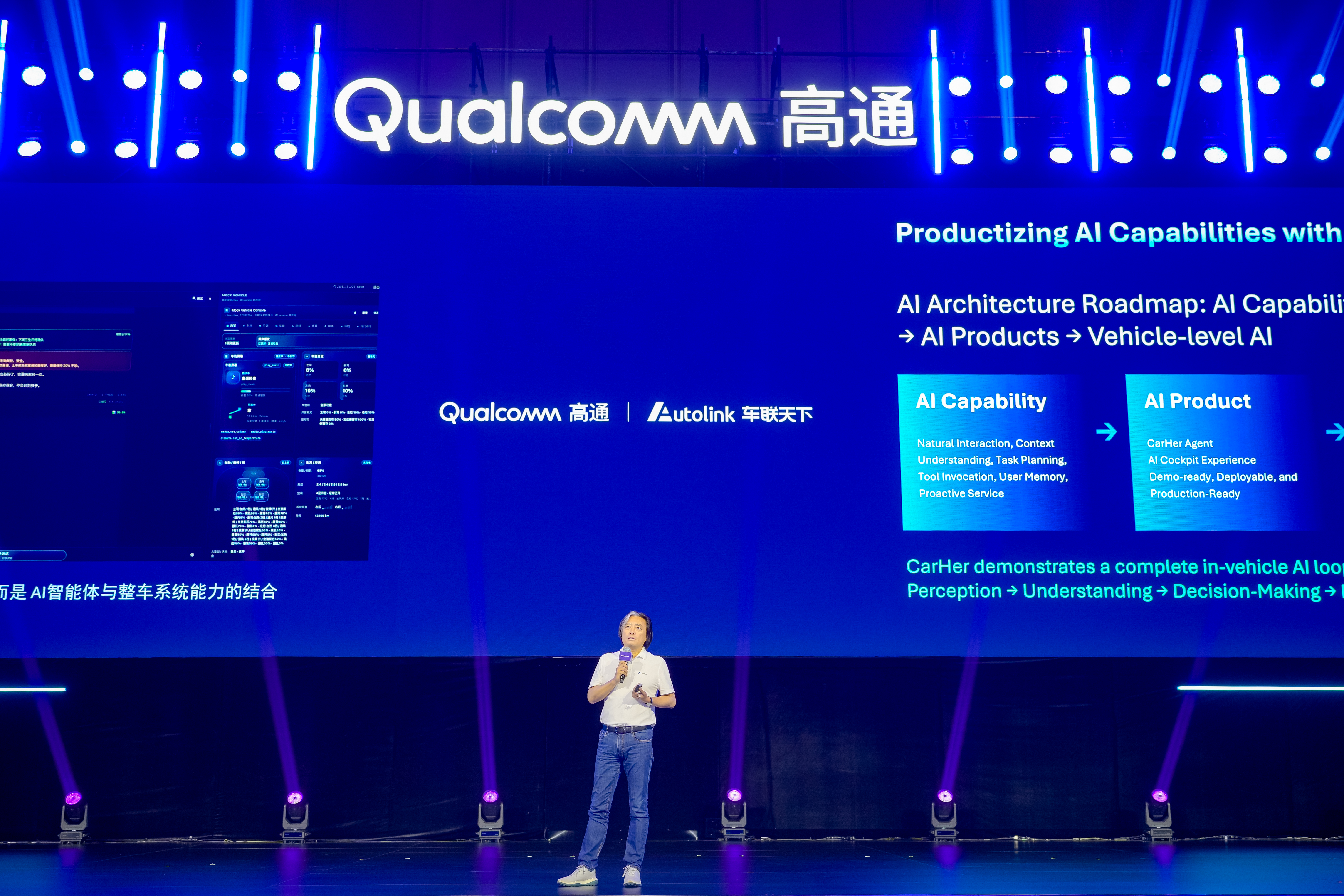
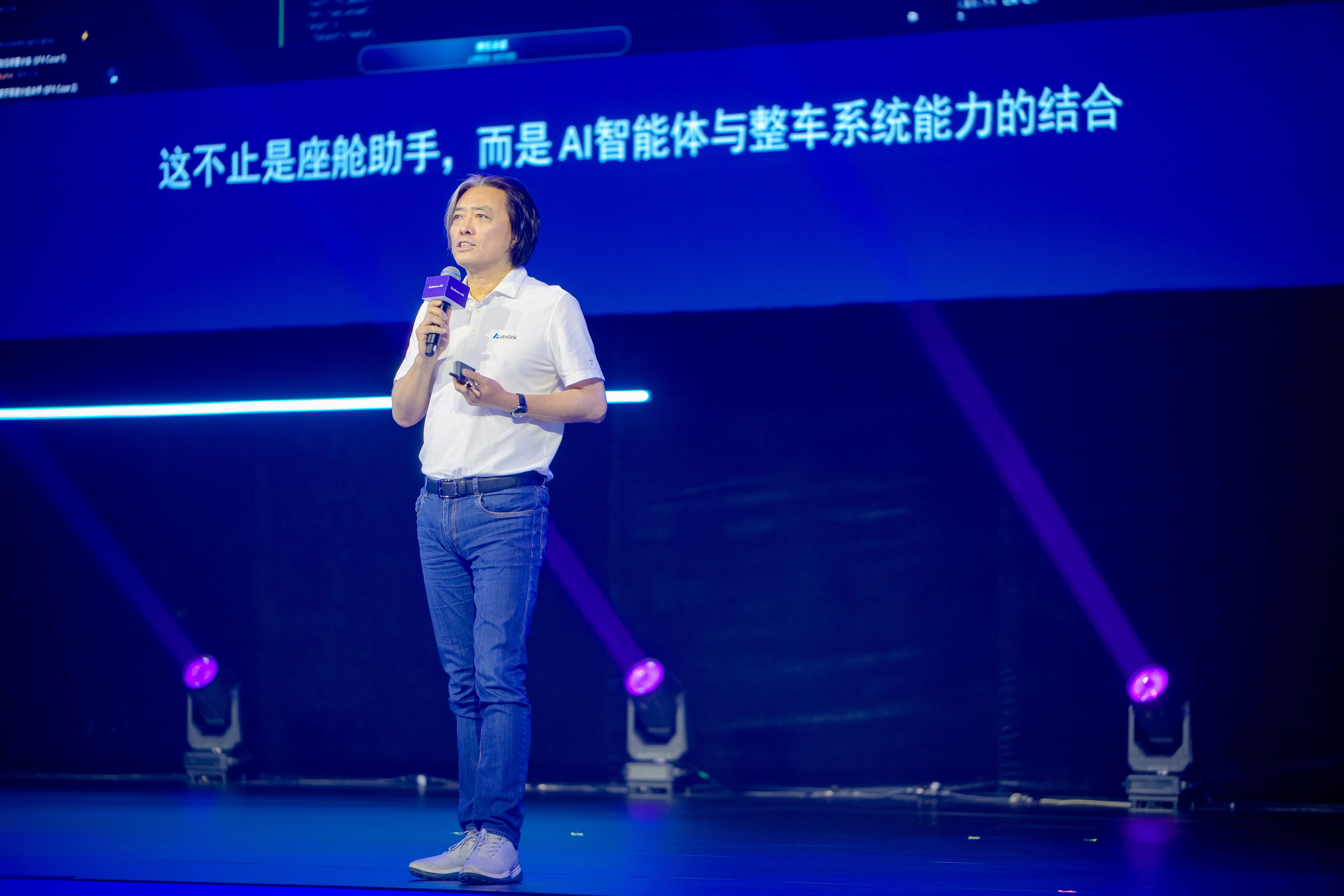
Yang Hongze, Founder and Chairman of Autolink, delivered a keynote titled "Product System Upgrade Toward the AI-Defined Vehicle Era."He noted that while the past decade saw the automotive industry evolve from distributed to domain-based electronic architectures, the next decade will be defined by AI as the core driver of vehicle architecture, product form, and user experience. Future competition, he emphasized, will shift from individual features and configurations to whole-vehicle AI capabilities and continuous evolution.
From Product AI to Vehicle-Wide AI: A New Phase of Industry Development
According to Mr. Yang, AI has thus far been applied in automotive primarily through voice assistants and smart interactions—localized enhancements rather than systemic transformation. With the maturation of on-device large models, in-cabin AI agents, multimodal perception, and central computing platforms, AI is now moving from point solutions to vehicle-wide intelligence.
Autolink proposes a coordinated development path of "AI Technology → AI Products → Vehicle AI": leveraging on-device models, multimodal interaction, cloud-vehicle collaboration, and data closed-loops as technical foundations; deploying AI cockpits, AI Boxes, and central computing platforms as product carriers; and ultimately embedding AI into the vehicle's perception, comprehension, decision-making, execution, and continuous learning processes.
On the technology front, the company is advancing key capabilities including on-device models, multimodal interaction, cloud-edge coordination, and data flywheels. On the product front, AI cockpits, AI Boxes, and central computing platforms translate these technologies into production-ready solutions. Internally, Autolink has integrated AI across product definition, R&D collaboration, testing and validation, project delivery, and customer support—embodying its "Company-wide AI Capability Building" strategy under the broader "All-Domain, Globalized, End-to-End, AI-Empowered" strategic framework.
From AL1.0 to AL3.0: Reimagining E/E Architecture for the AI Era
Autolink unveiled a three-stage roadmap for electrical/electronic (E/E) architecture evolution:
AL1.0 (Cross-Domain Fusion): Focused on scaling cross-domain integration, enabling functional synergy between intelligent cockpit and driving systems.
AL2.0 (Deep Fusion EEA): Built around central computing, zone controllers, and high-speed communication networks, upgrading from multi-domain coordination to full-domain convergence.
AL3.0 (General AI EEA): Designed for the future vehicle-AI era, reconstructing E/E architecture from the ground up to support continuous learning, reasoning, and evolution.
"The goal of architectural evolution is not just integration, but intelligence," Mr. Yang stated. "The core mission of future E/E architecture is to give vehicles continuous evolution capabilities."
The "Four Product Cycles": Turning Platform Power into Scalable Product Systems
Mr. Yang introduced Autolink's "Four Product Cycles" methodology—a circular architecture design driven by data & information, software architecture, and hardware architecture, forming a closed-loop system from customer requirements and product definition through engineering delivery, ecosystem collaboration, and project feedback.
"This is not a flowchart—it's our product management philosophy," Mr. Yang explained. "Its core objective is to transform Qualcomm platform capabilities into a continuously evolving product system."
This framework has enabled Autolink to rapidly iterate and scale products across multiple Snapdragon generations, from 8155 to 8797. As of May 2026, the company's AL-C1 intelligent cockpit domain controller, built on the Snapdragon 8155 platform, has surpassed 2.3 million units in cumulative shipments—ranking No. 1 globally by Frost & Sullivan.
Meanwhile, Autolink's AI Box offers a retrofit path for existing vehicle models to upgrade their AI capabilities. At the summit, the company also demonstrated CarHer, an AI agent showcasing deep integration between AI and vehicle systems—delivering a complete closed loop from perception and comprehension to decision-making, execution, and feedback.
"CarHer is not a simple voice assistant—it represents Autolink's exploration of what whole-vehicle AI looks like in practice," Mr. Yang said.
Seven Years of Partnership: Advancing Toward Central Computing with Qualcomm
As a long-standing Qualcomm partner, Autolink has built a comprehensive product portfolio spanning the Snapdragon 8155, 8255, 8775, and 8797 platforms. Its cockpit-driving fusion domain controller based on the Snapdragon 8775 has entered mass production in models including the Arcfox Alpha T5 and S5. The AL-A2 cockpit-driving fusion domain controller based on the Snapdragon 8797 is currently advancing toward production deployment.
Mr. Yang noted that the partnership has evolved from product development to technology co-creation—spanning smart cockpits, cockpit-driving fusion, domain controllers,, and central computing.
"AI is becoming the new infrastructure for smart vehicles. Future competition will not be about chip capabilities alone, nor software alone—but about system-level AI capabilities."
AI-Defined Vehicles: An Emerging Industry Consensus
Throughout the summit, OEMs, chipmakers, and supply chain partners engaged in extensive discussions around on-device large models, in-vehicle AI agents, and centralized computing architectures. From software-defined to AI-defined, from domain controllers to central computing, from functional intelligence to vehicle-wide intelligence—the industry is converging on a shared view: AI is reshaping the technological foundation of the automotive sector.
For Autolink, the journey from AL1.0 to AL3.0 and from product AI to vehicle AI represents not merely a product upgrade, but a long-term strategic commitment to next-generation intelligent mobility.
"Over the next decade, AI will be one of the most important variables in the automotive industry," Mr. Yang concluded. "Autolink looks forward to working with global partners to drive smart vehicles from the software era into the AI era."